, 10 min read
Forex No Deposit Bonuses in 2027 Top Broker Guide
Use this 2027 Forex No Deposit Bonuses List to find brokers offering free trading credits and learn the terms, limits, and withdrawal rules.
Read articleUse this 2027 Forex No Deposit Bonuses List to find brokers offering free trading credits and learn the terms, limits, and withdrawal rules.
Read article$50 no deposit bonus is promotional trading credit a broker adds to a new live account after sign-up, usually after phone or ID checks. You...
Read articleCompare forex broker ratings from leading independent review sites side by side. See the top-rated brokers for 2027 — IG, Pepperstone, FP Ma...
Read articleKCM Trade AI Mentor vs Human Analysts gives beginners a clear comparison of feedback, guidance, and learning speed before they choose a path...
Read articleSolus Finance brings trading contests to life with a gamified platform for competition, strategy, and real-time performance tracking.
Read articleCompare Forex brokers in 2027 with a wider lens, from spreads and commissions to regulation, trading tools, order quality, and client servic...
Read articleGFunded Prop Firm Review with a clear look at rules, funding options, fees, payouts, and support, plus who it fits and who should skip.
Read articleSee which of the 7 best regulated forex brokers for 2027 offer strong oversight, fair pricing, and secure tools for active day and swing tra...
Read articleCommon promotions include a matched welcome bonus, where the broker adds funds equal to your deposit. For instance, deposit $100, trade with...
Read articleSee the Best Copy Forex Trading Platforms for 2027, ranked by cost, tools, and safety. Compare signals, copy pros, and pick a broker you can...
Read articleFind forex brokers with 5 no-deposit bonuses in 2027, top picks only. We rate rules, withdrawal limits, and support, so you can try with no...
Read articleJoin RoboForex and claim your $30 welcome bonus. Experience quick access to global markets and open your first trades with zero deposit.
Read articleMaxifyFX offers a $35 sign-up no deposit Forex bonus for new users. Trade with bonus funds and discover platform features without risking yo...
Read articleJustMarkets now offers new app users a $10 free promotion, making it easy to start trading without any deposit. After signing up, you'll get...
Read articleLearn how forex deposit bonuses can give your trading account a real edge. Simple tips help you use every bonus to its fullest potential.
Read articleGrab a $50 FenzoFx No Deposit Bonus today. Sign up in minutes and test the platform risk-free. Get started with extra funds on your account.
Read articleGet honest insights into KCM Trade broker's features, fees, and reliability. Understand if it’s the right platform for your investment goals...
Read articleStart trading with Grand Capital $500 No Deposit Bonus. Trade without risk and explore real market opportunities. Sign up and claim your bon...
Read articleVonway is offering an 85% Forex trading bonus for Eid Al-Fitr, available for a limited time. This promotion is designed to enhance your trad...
Read articleClaim your free $30 no deposit bonus from Vonway Forex today. Start trading risk-free and unlock new opportunities in the forex market!
Read articleThe forex reviews in this category examine brokers, trading platforms and tools from a trader's point of view. The posts listed above look at the details that affect your account every day, from regulation and fees to withdrawals and support, and this guide shows how to read them critically and turn them into a confident decision.
Every broker or tool is different, but most assessments return to the same core questions. Use the checklist below to compare any two reviews on equal terms. Weight each criterion according to your own needs: a long-term position trader cares more about swaps, while an active day trader focuses on spreads and execution speed.
| Criterion | What to look for | Why it matters |
|---|---|---|
| Regulation | Licence number and the authority that issued it | Defines client protections and dispute options |
| Trading costs | Typical spreads, commissions, swaps and inactivity fees | Costs reduce every trade's result |
| Execution | Order types, slippage reports, platform stability | Affects the price you actually get |
| Deposits and withdrawals | Methods, processing times, fees | Access to your own money |
| Platforms | MT4, MT5, proprietary apps, mobile | Shapes your daily workflow |
| Support | Channels, languages, responsiveness | Crucial when something goes wrong |
Even a detailed assessment is a snapshot taken at one point in time. Read with these habits:
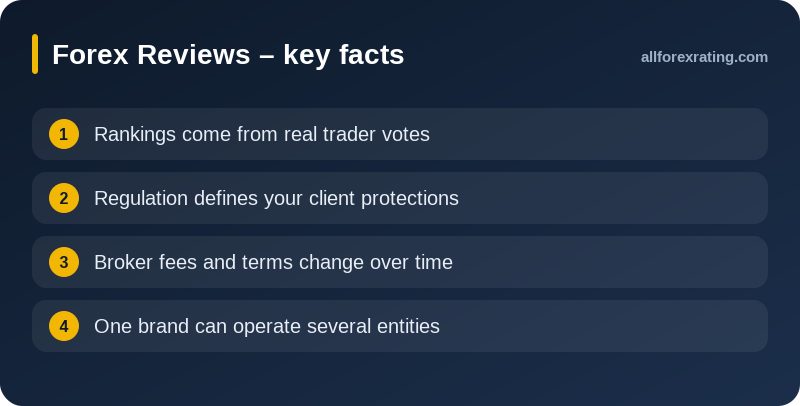
Editorial reviews explain features and conditions in depth, while real users report on lived experience such as withdrawal speed or support quality. On our site, broker rankings come from traders voting For or Against, not from paid placements, so the two sources complement each other. Read the written assessment here, then check the trader reviews and comments to see whether real experiences match.
Before acting on an assessment, ask who wrote it, what criteria were used and whether the author tested the service with a real or demo account. Consider whether the review covers the specific entity you would join, since conditions for clients in Europe, Australia or elsewhere may differ. Finally, note how withdrawals were handled; smooth deposits are easy, but timely withdrawals show how a firm treats its clients.
Not every post covers a broker. Some forex reviews assess trading platforms, expert advisors, signal services or analytics tools. For these, focus on compatibility with your broker, transparency of past performance and total cost. Our trading platforms guide gives extra background on the software side.
Once you have a shortlist, revisit the best forex brokers ranking to see how the community currently votes, then open a small account first and scale up only after testing deposits and withdrawals. A broker that suits a scalper may not suit a long-term swing trader, so match the review findings to your own style.
Revisit forex reviews periodically even after you have chosen a broker. Changes in ownership, regulation or fees can make a once-suitable firm less attractive, and staying informed lets you move early rather than react late.
Please remember that forex and CFD trading with leverage involves a high risk of losing money. Reviews describe services and conditions; they are not recommendations to trade or guarantees of results.
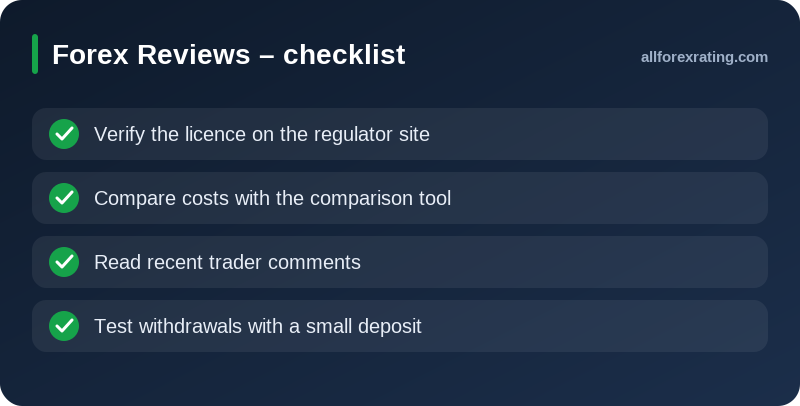
Trustworthy reviews state their criteria, mention drawbacks as well as strengths and are dated. Cross-check key facts such as licences and fees directly with the regulator and the broker.
Start with regulation: confirm the company and licence number on the regulator's public register. Then compare costs, platforms and withdrawal conditions.
Individual comments can be emotional or one-sided, but patterns across many users are informative. Repeated complaints about withdrawals or support deserve serious attention.
Yes, spreads, leverage limits, fees and promotions can change at any time. Always confirm current terms on the broker's website before opening an account.